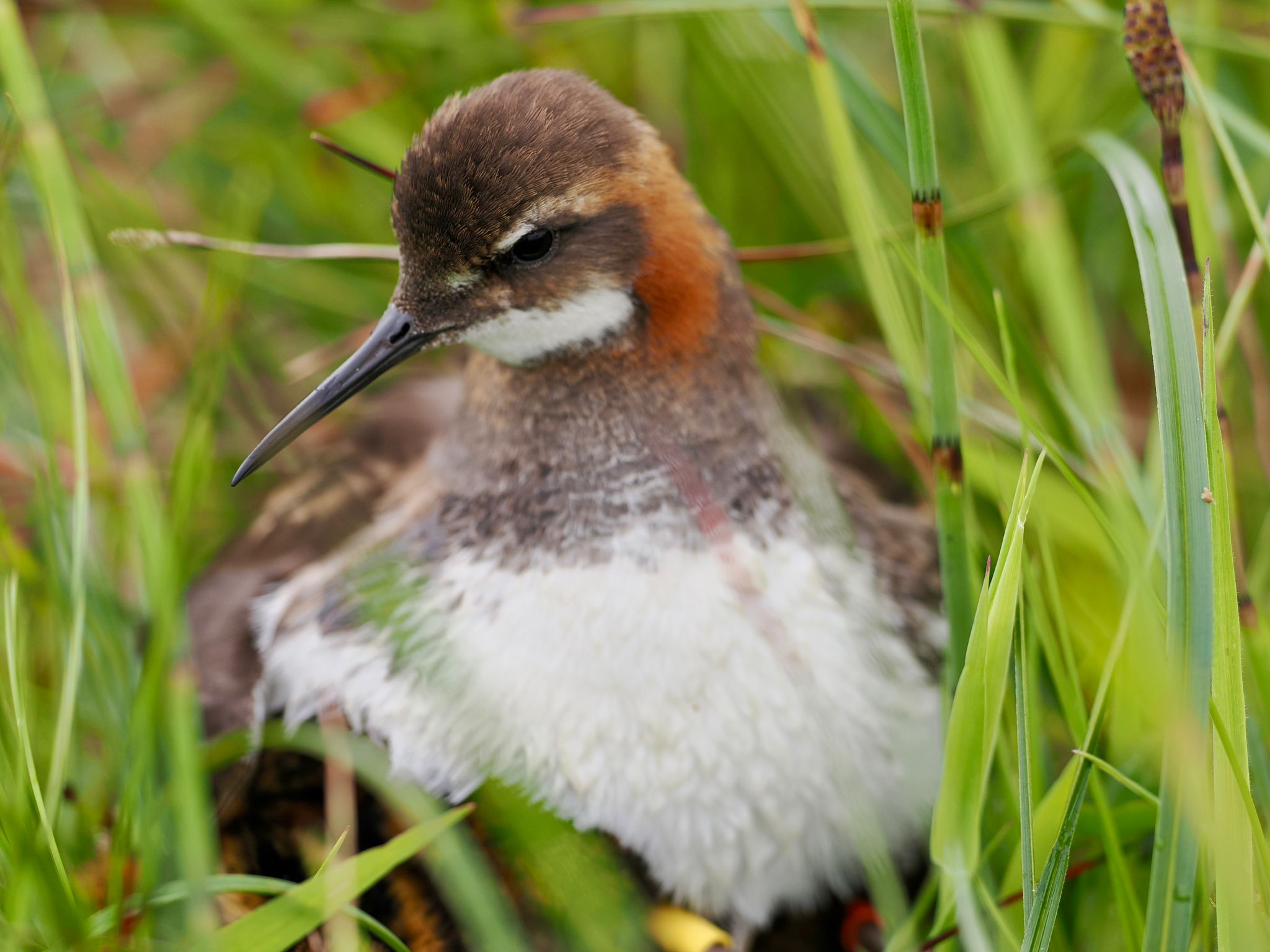
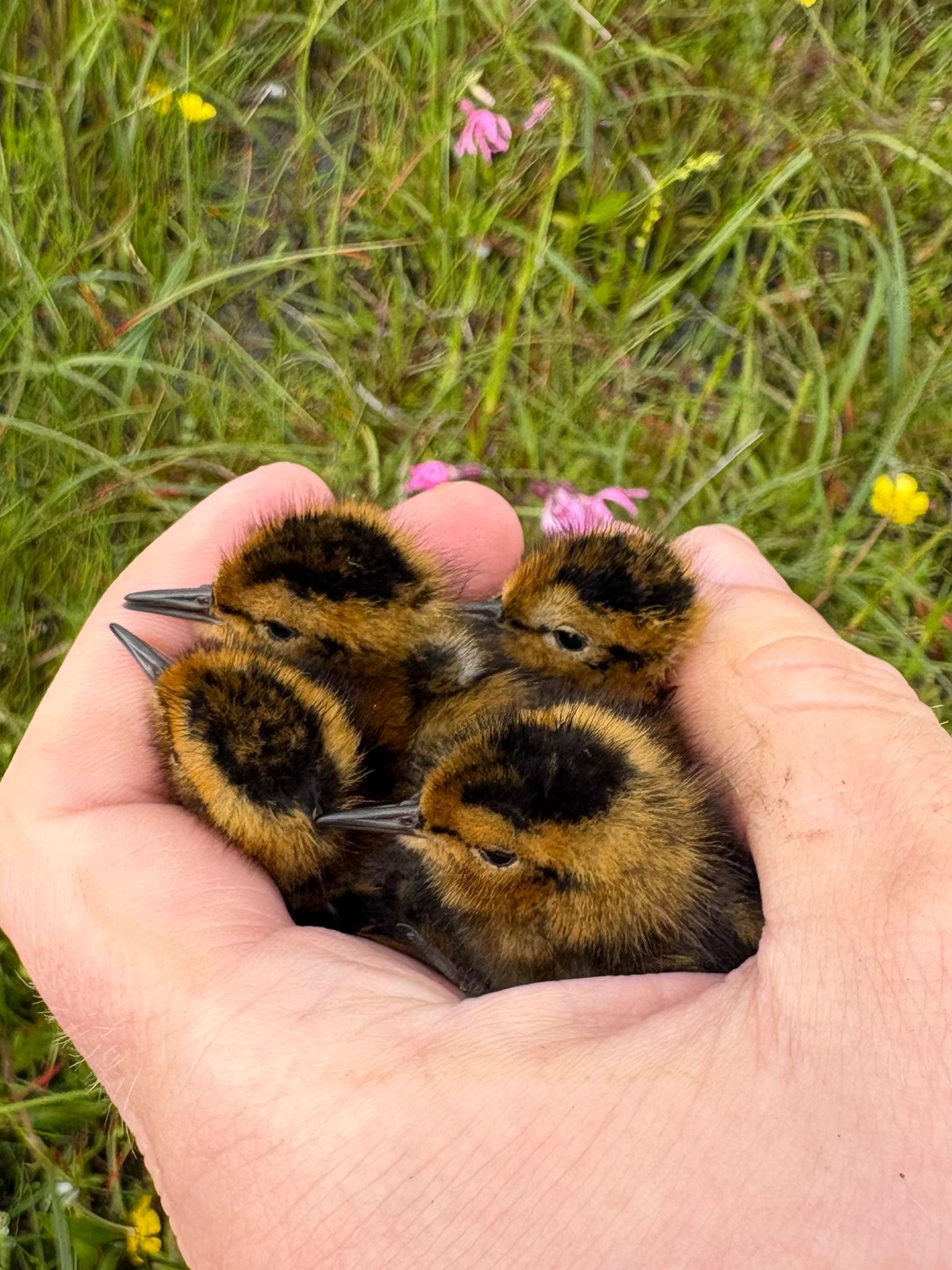
The red-necked phalarope is slender wading bird with a needle-like beak and striking chestnut markings. But it’s not just beautiful, it’s also an endurance athlete. This ounce and a quarter of feather and muscle flies from Peru to the United Kingdom and back every year—a 16,000-mile round trip. Worldwide, the species’ population is decreasing. In the UK, there are fewer than 100 breeding males. About 80% of them nest on Fetlar Island, at the top of the Shetland Islands.
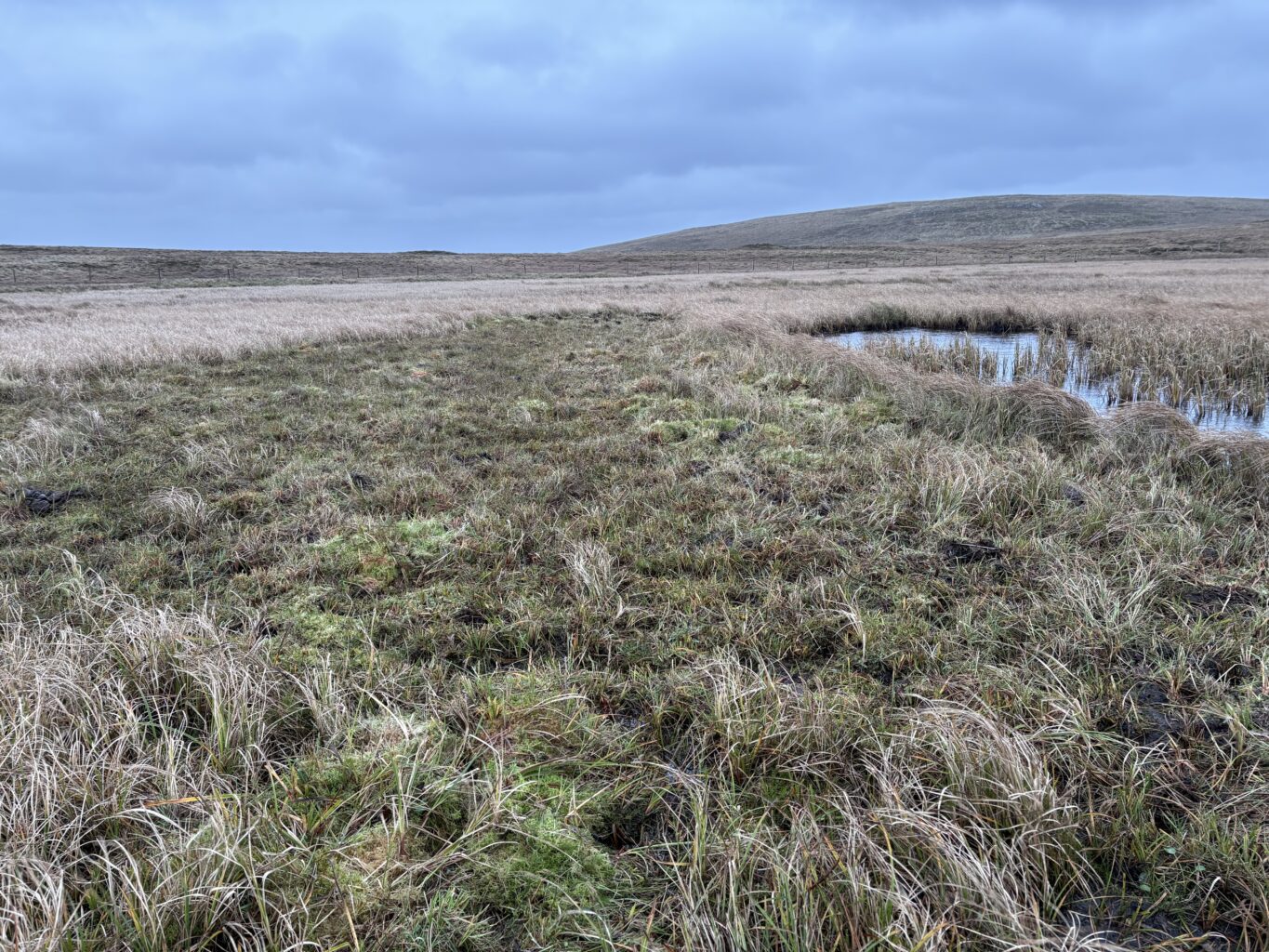
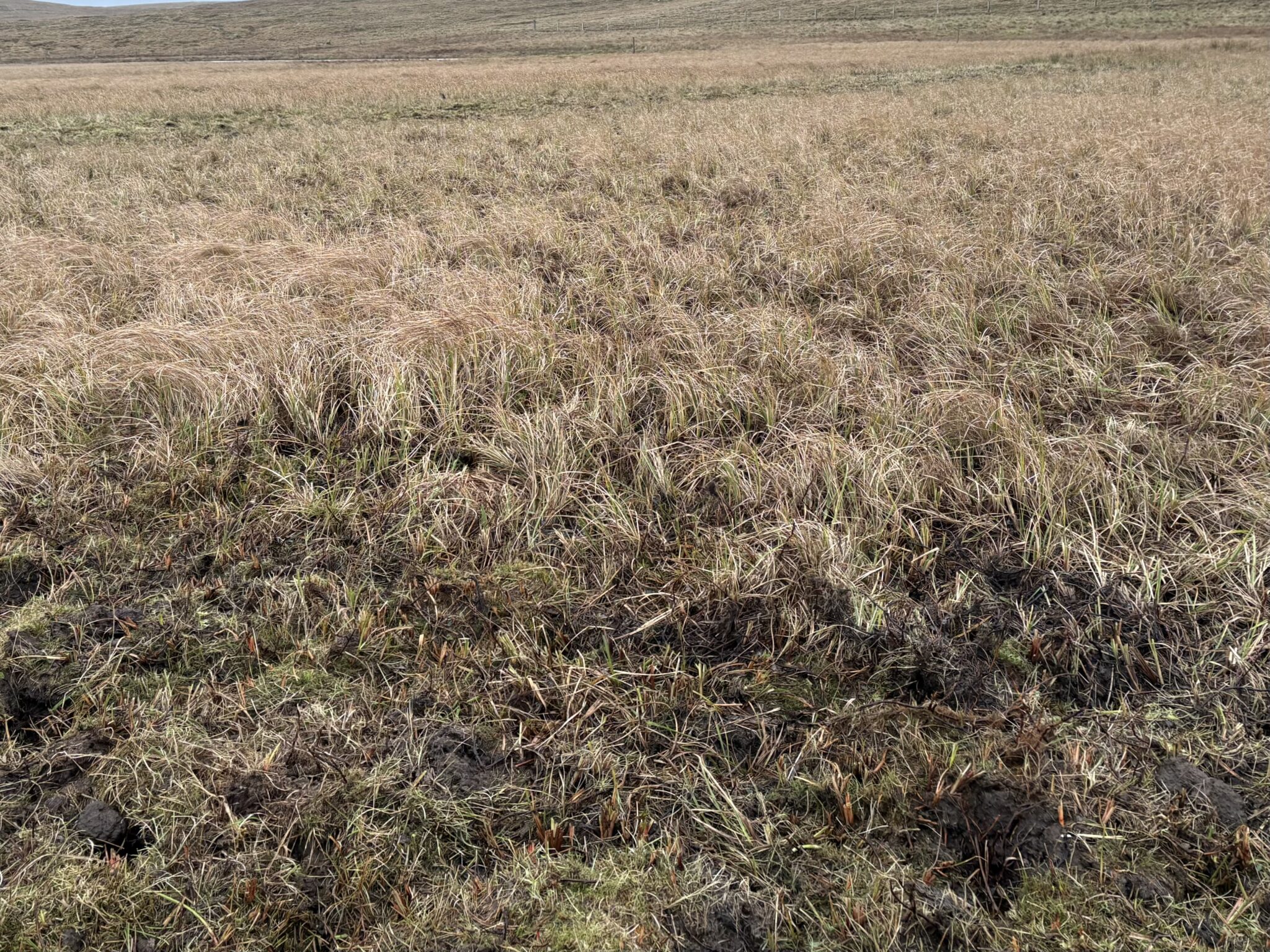
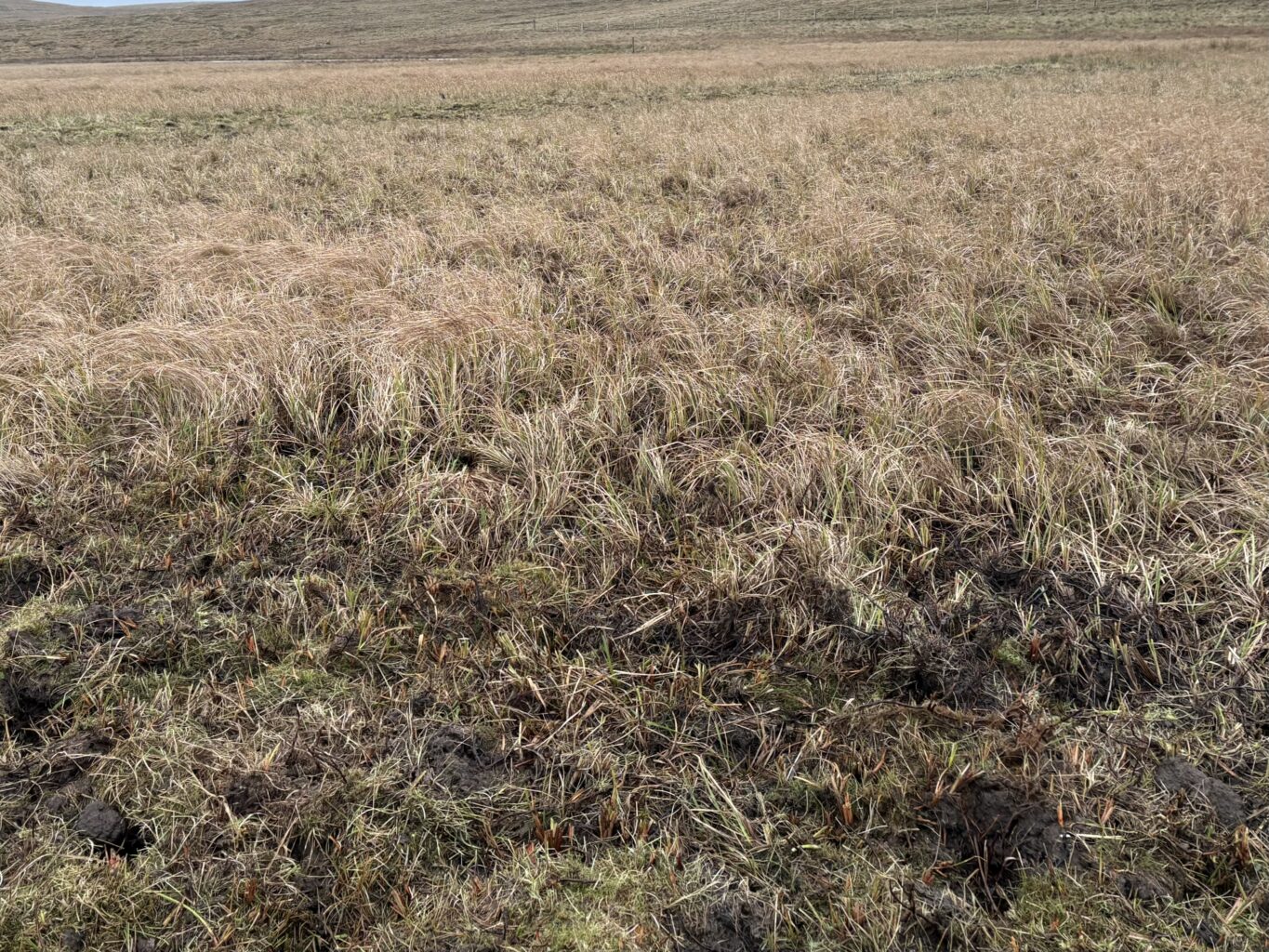
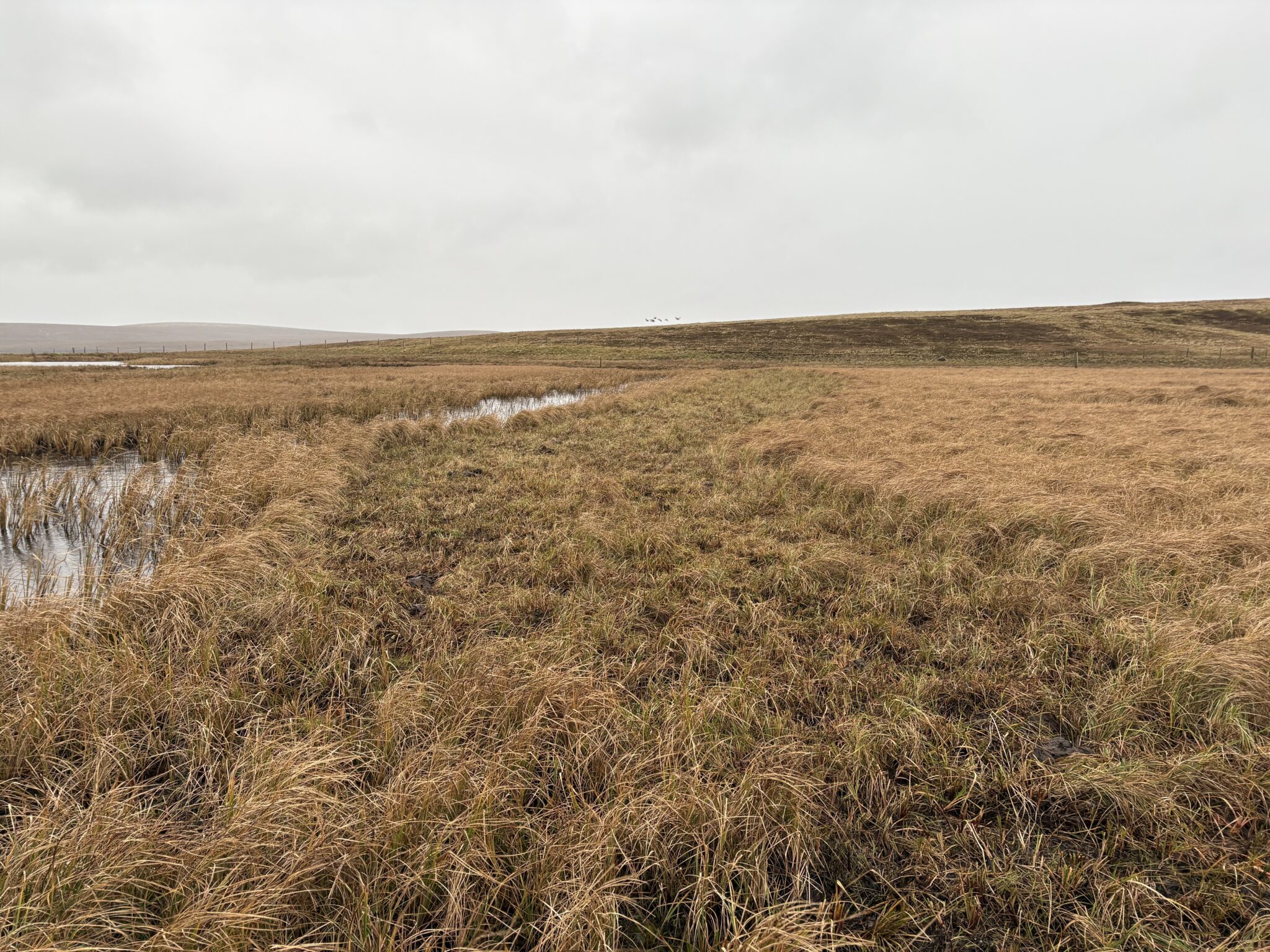
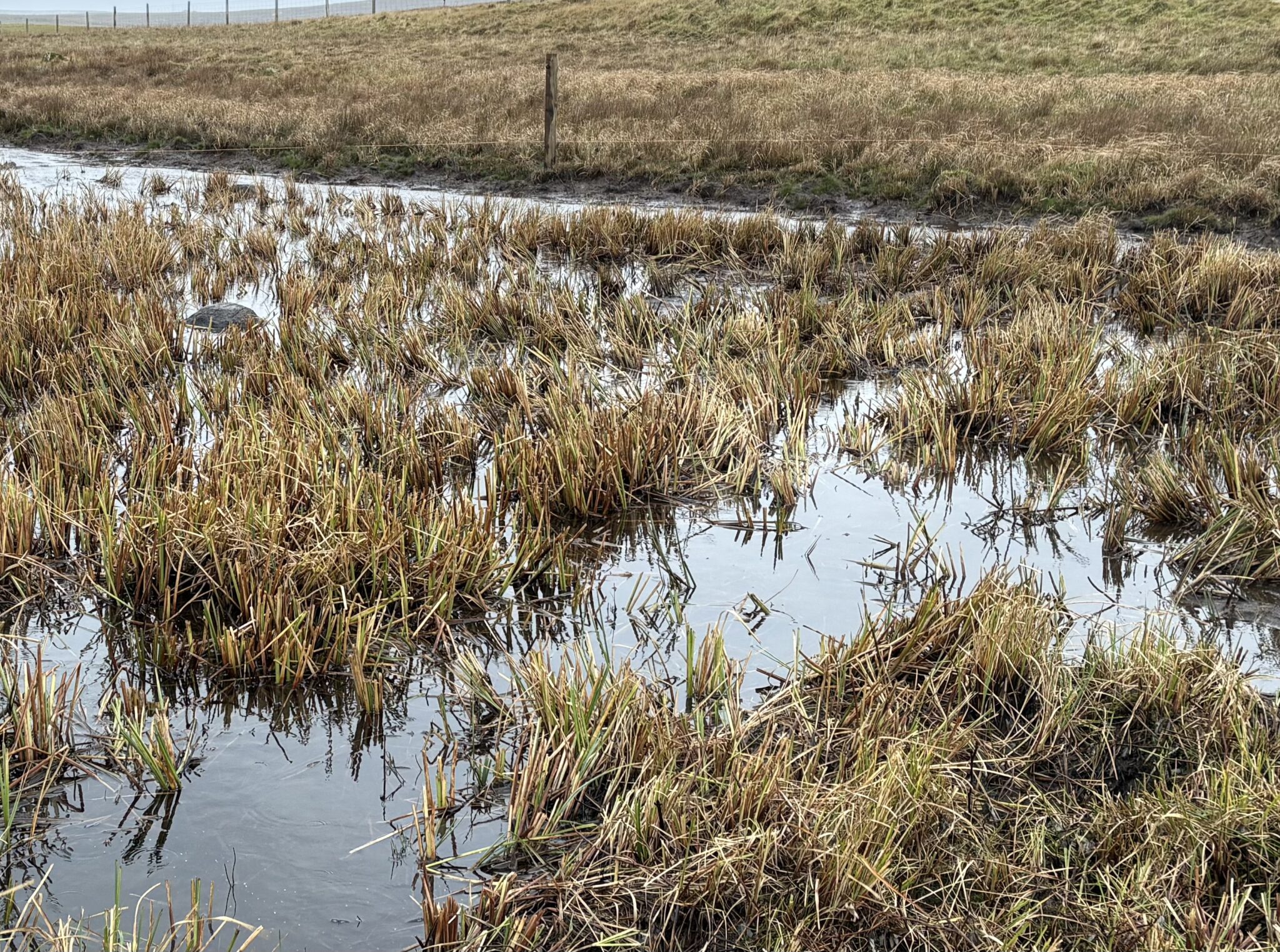
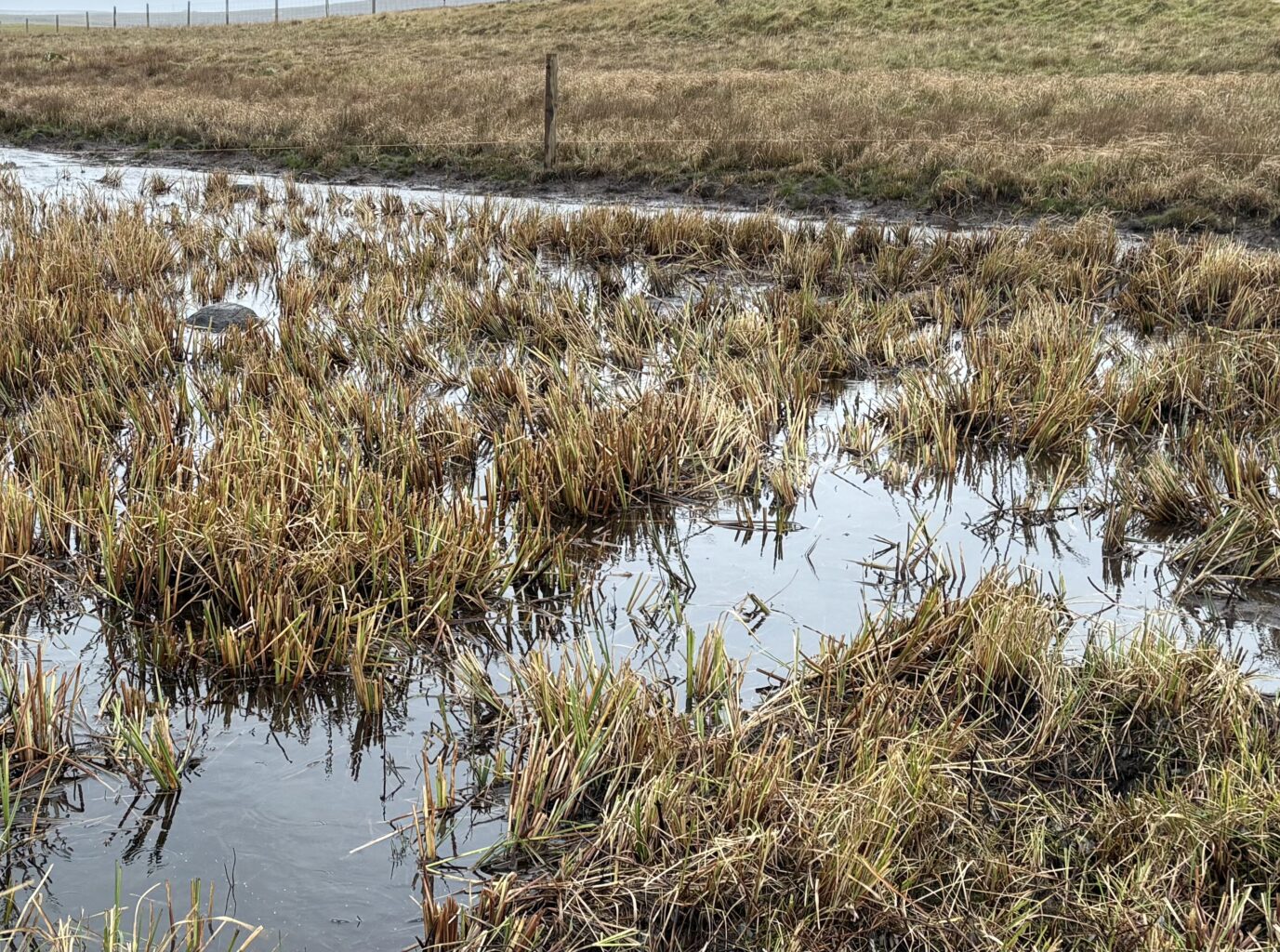
The birds need very specific conditions to raise young. Once, ancient grazing animals trod Fetlar Island, trampling vegetation and creating the clearings and pools the phalaropes need. Now that those grazers are gone, vegetation very quickly becomes too dense for birds to use.
For several years, volunteers have cleared vegetation and dug mud out of pools by hand. These labor-intensive efforts have kept the phalarope population stable; our grant will help scale up the work.
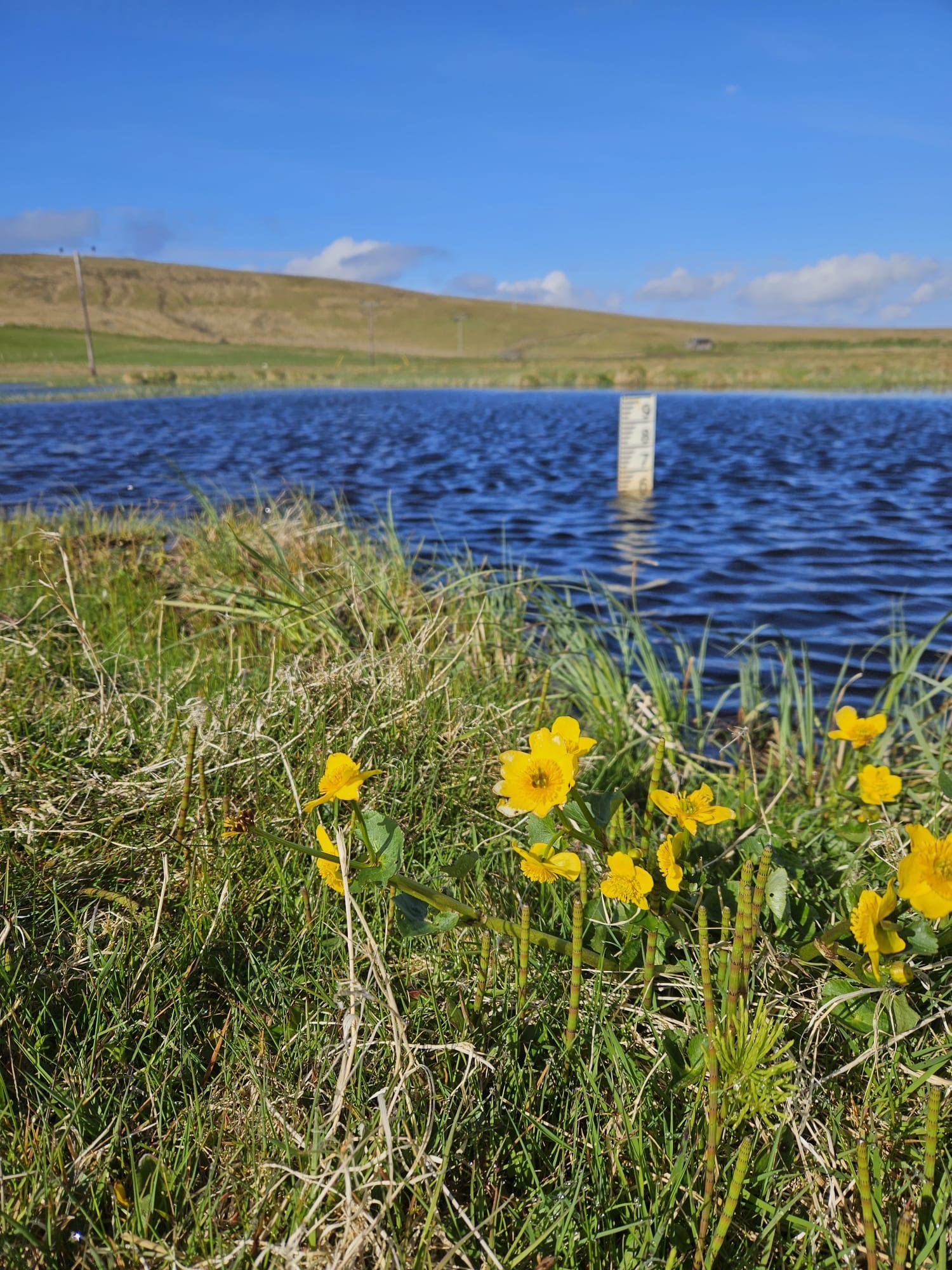
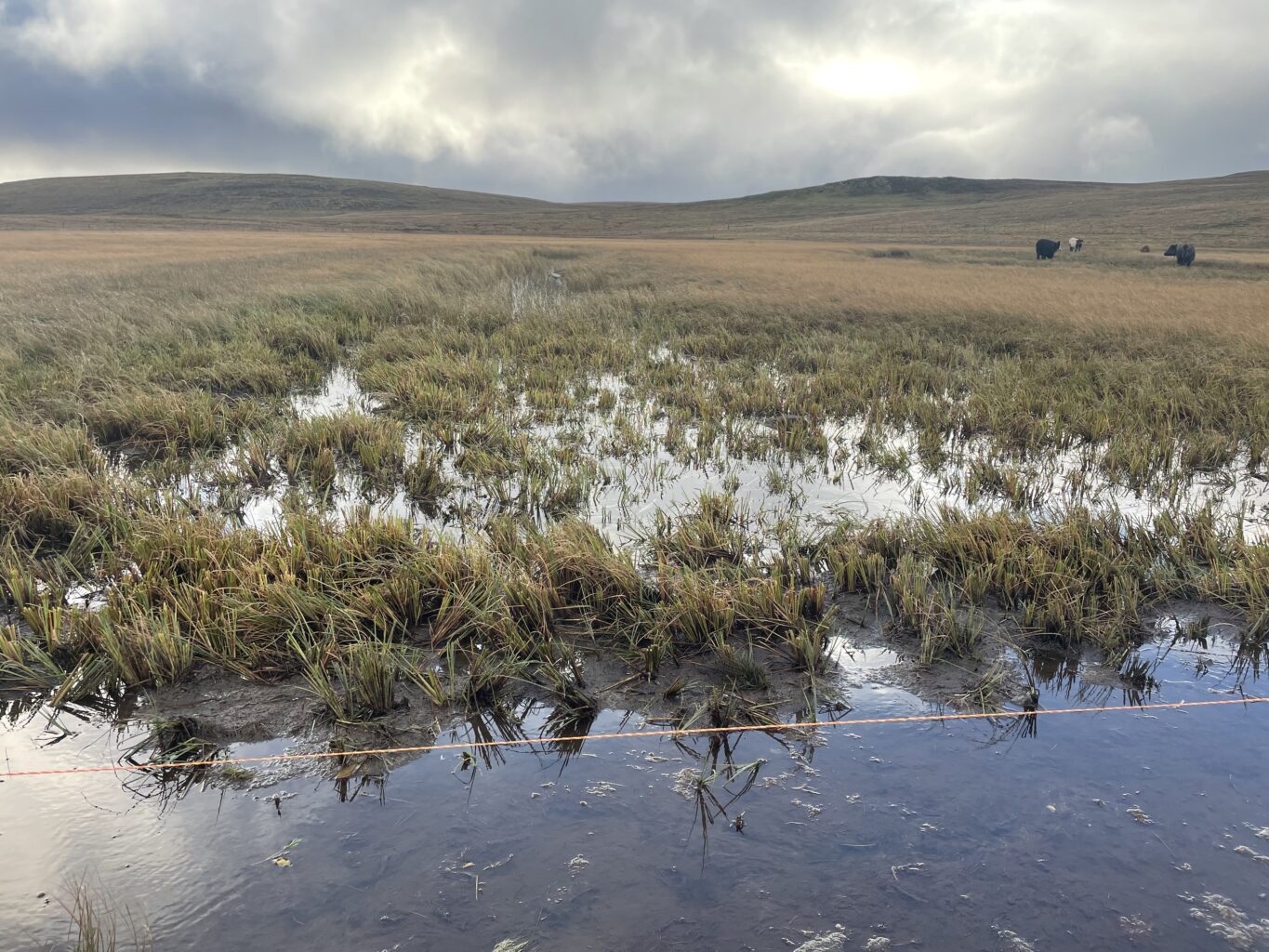
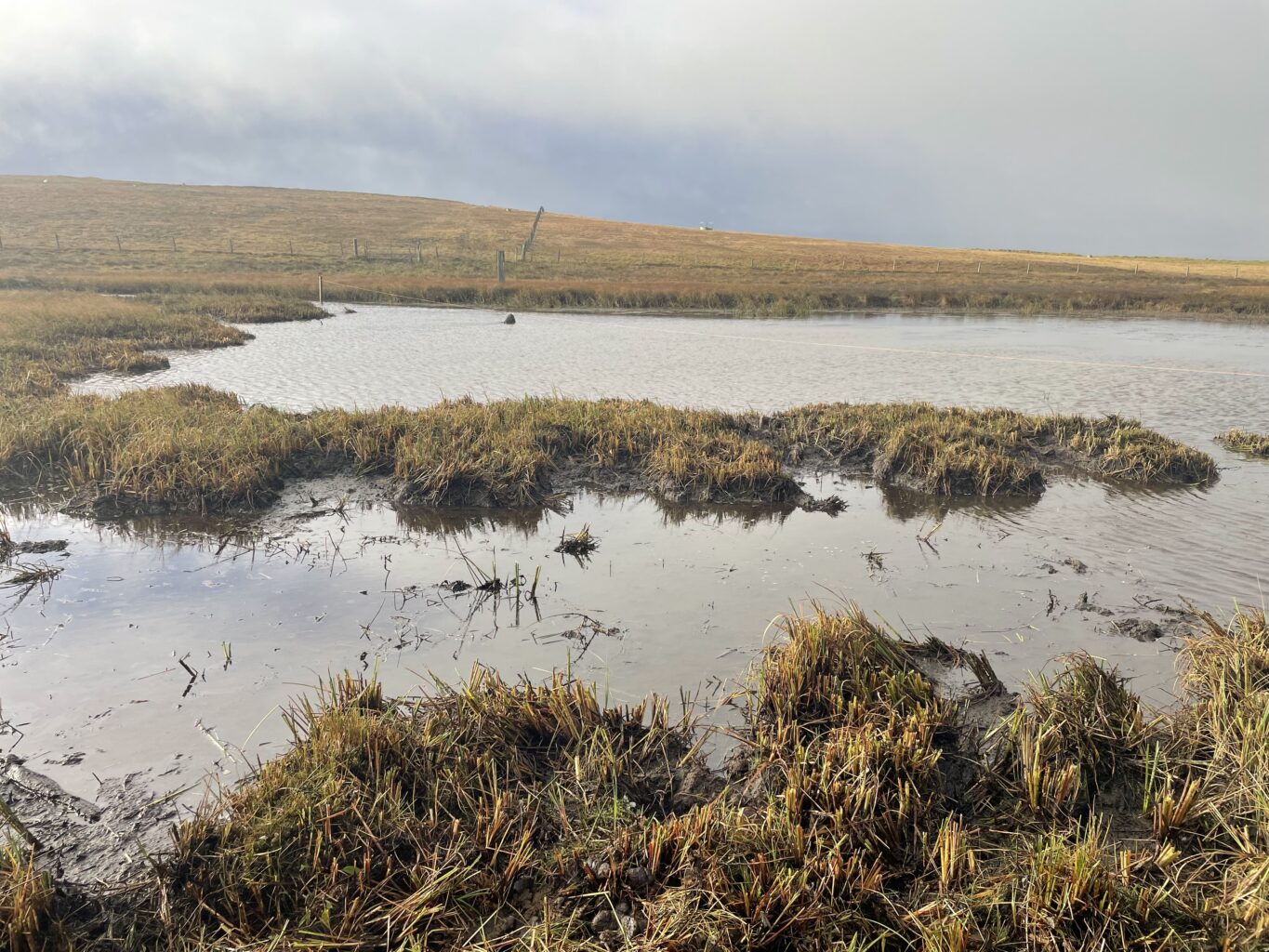
Most of the breeding sites are in small, hard-to-reach mires, on crofting land. (Crofts are small holdings used for grazing or farming, carefully controlled to keep old Scottish traditions alive.) To keep them suitable for birds, it’s necessary to create new pools and use targeted grazing to manage vegetation. This project uses both tactics to restore three sites.
First, digging will create small pools and open areas for the birds. Tourists also use the openings to spot birds. This is significant because wildlife-based tourism helps the fragile economy of this remote island and creates an incentive to protect habitat.
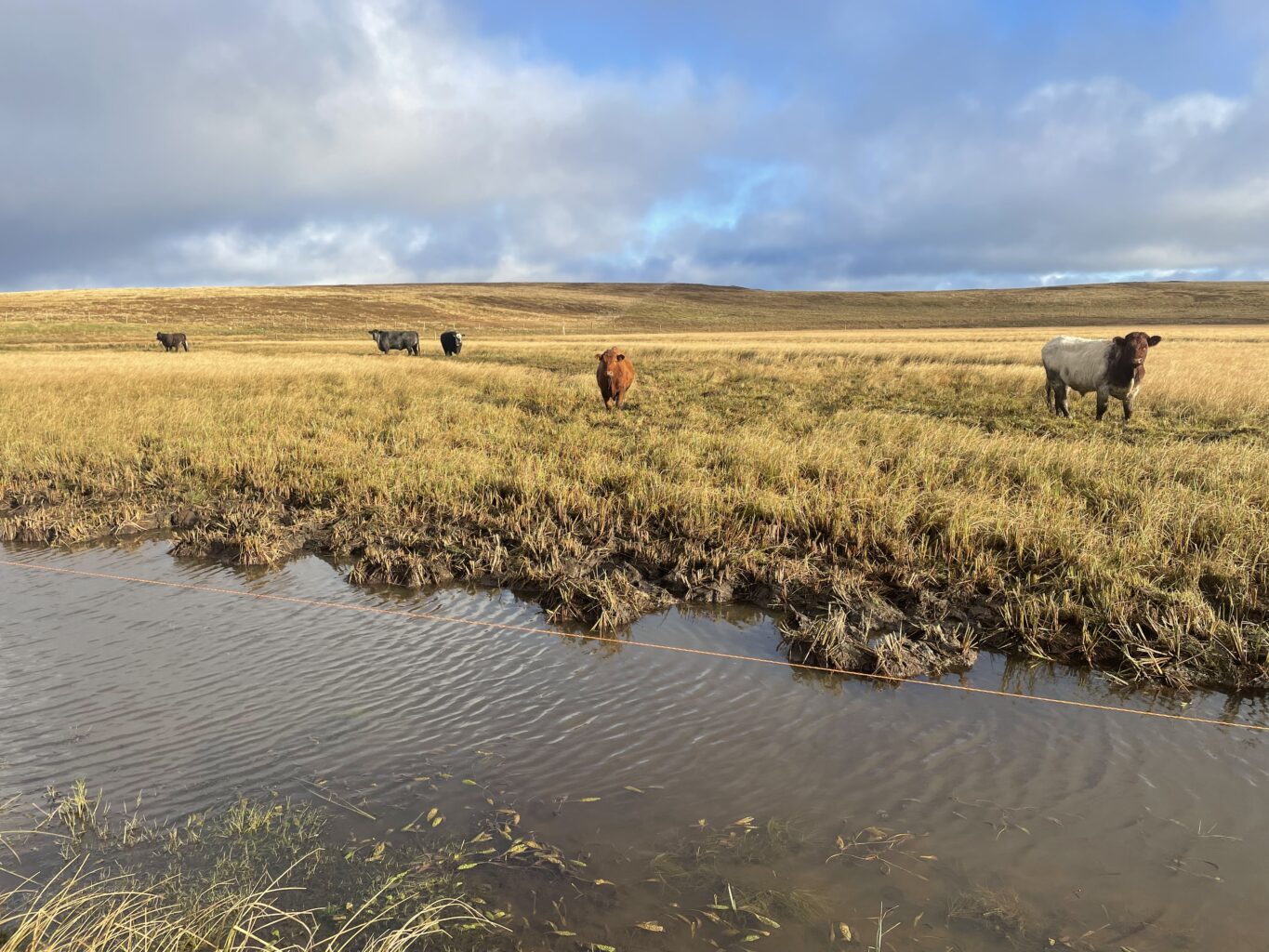
Then, crofters will follow a “conservation grazing” program developed by the Highlands and Islands Environment Foundation. It requires moving animals around in a way that replicates the effect of ancient grazers. The result will be vegetation of the height and density that phalaropes and other wading birds (curlew, snipe, redshank) need. HIEF expects this work to trigger an immediate uptick in bird population.