

Each year, we award the Seacology Prize to an islander for exceptional achievement in preserving island environments and culture. This honor comes with an award of $10,000 and a trip to the United States for a public award ceremony in October.
2026 recipient: Chief Anette Sanford
Our 2026 Seacology Prize recipient is Anette Thomas Sanford, chief of Dominica’s Kalinago Territory.
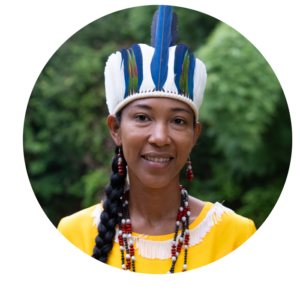 The Kalinago are the only Indigenous people of the Caribbean to maintain their institutions in their ancestral homeland. Once widespread throughout the region, their largest population now lives along the eastern coast of Dominica, in an area of dense forests, steep mountains, and beautiful river valleys. Unfortunately this fragile environment is under threat from unchecked resource extraction, carried out despite strong local opposition.
In 2024, Sanford was elected Chief of the Kalinago Territory, the first woman ever to hold the position in the community’s recorded history. Also known by her Kalinago name, Arkuenani, she has been an outspoken defender of her people’s sovereignty and the health of the fragile island ecosystems on which they depend. Recently she has emerged as a key leader in the opposition to a destructive quarry bordering the Kalinago territory at Deux Branches, which threatens an important watershed, Indigenous rights, and public health. Working with grassroots conservation movement Save Deux Branches, she has stood up to powerful interests to challenge the project and defend the legal, environmental, and human rights of the Kalinago and others downstream from the mining.
On Monday, October 12, we will present the 2026 Seacology Prize to Chief Sanford, in honor of her steadfast advocacy for the Kalinago and the preservation of Dominica’s spectacular natural heritage. As always, the Seacology Prize Ceremony is free and open to the public, but space is limited so we encourage you to save your seat early. For those unable to attend in person, we will stream the event live on YouTube.
About the Seacology Prize
The first Seacology Prize went to Chief Ulu of Samoa, in the South Pacific. To protect his village’s ancestral rainforest, the chief resisted years of pressure from logging companies.
Since then, Seacology has honored dozens more determined and inspiring men and women from around the world. Every one of them has faced resistance, taken risks, and made personal sacrifices. Some have faced grave personal danger—but persisted to protect the islands they call home.
The Seacology Prize is underwritten by Seacology’s President Ken Murdock, in honor of his mother, Lalovi Fish Murdock.
Recent recipients
2025
Cynthia Ong has worked tirelessly to halt ecological damages on Borneo, as well as promoting positive, sustainable policies and actions to help her island and its people thrive. She has helped bring clean power to remote communities, establish legal protections for endangered species, and organize indigenous people to protect their land.
2024
Mohammed Kolugege has spent decades working to preserve the fragile ecology and unique history and culture of his native island in India’s remote Lakshadweep archipelago. He has led efforts to protect local coral reefs, curates a museum of the local seafaring culture on Minicoy Island, and helped preserve the island’s unique folk song and dance traditions.
2023
Dr. Jonah Ratsimbazafy is an accomplished primatologist who has made it his life’s work to protect the threatened lemurs only found in his native Madagascar. He works with local communities to build support for conservation across a country where widespread poverty poses severe threats to the island’s famous biodiversity.
2022
Kevin Iro is a former international rugby star from the Cook Islands, who was instrumental in the creation of Marae Moana, the world’s largest multi-use marine park. Legally established in 2017, the reserve protects the entirety of the country’ exclusive economic zone, an expanse of ocean roughly the size of Mexico.