

Dedicated Sri Lankans save mangrove museum from devastating cyclone
Mangroves are known for their toughness. These coastal trees stand atop a tangle of durable roots that can withstand strong wind and waves, anchoring the shoreline. It turns out that the world’s first mangrove museum and learning center—and the people who are dedicated to it—are tough and resilient, too.
Late last year, when Tropical Cyclone Ditwah slammed into Sri Lanka, the Seacology-funded Lanka Mangrove Museum and Learning Center was directly in its path.
With the storm approaching, its staff sprang into action, quickly moving displays and equipment upstairs before floodwaters could destroy them. As the water rose, Director Duglas Thesera opened the doors to prevent the pressure from shattering the large glass panels that make up several of the building’s exterior walls. In the lobby, the water rose chest-high. But Thesera stayed in the museum for several days, waiting out the cyclone.
The storm caused immense damage and suffering. About a fifth of the country was flooded. More than 600 people died. As devastating as the storm was, it likely would have been significantly worse without the natural barrier that Sri Lanka’s mangroves provide. Mangroves also are one of the world’s greatest carbon sinks, slowing the global heating that’s making storms more intense.
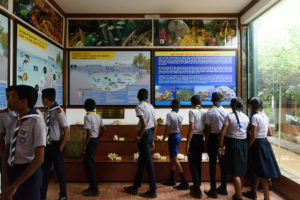
The mangrove museum opened in 2016 as part of Seacology’s five-year initiative to protect Sri Lanka’s mangroves and spread the word about the importance of mangrove ecosystems. It is a major hub for knowledge about mangrove ecosystems and their significance to the country’s environment and communities. Last year, thousands of schoolchildren, tourists, researchers, and policymakers visited the museum.
As the storm tore through Sri Lanka, our staff in the US waited anxiously for news. But with widespread power outages and communication spotty, we heard nothing for days. Finally, we were tremendously relieved to learn that staff members were safe, and that thanks to their quick response, the museum survived with just minor damage. After the water receded from the building, staff members and volunteers thoroughly cleaned everything and removed damaged furniture. Just two weeks after the catastrophe, they reopened the museum to visitors.
We’re immensely grateful to our partners in Sri Lanka for their dedication to the museum and its mission. Under their steady leadership, this unique facility has survived a pandemic, a nationwide economic collapse, and now a powerful cyclone. We’re hoping for an uneventful 2026.
Cyclone Ditwah caused severe flooding and landslides throughout Sri Lanka.
The museum's staff thoroughly cleaned and repaired the building after the storm.